
Indiana state officials want to attract data centers. Local communities are beginning to push back
Subscriber Benefit
As a subscriber you can listen to articles at work, in the car, or while you work out. Subscribe Now-
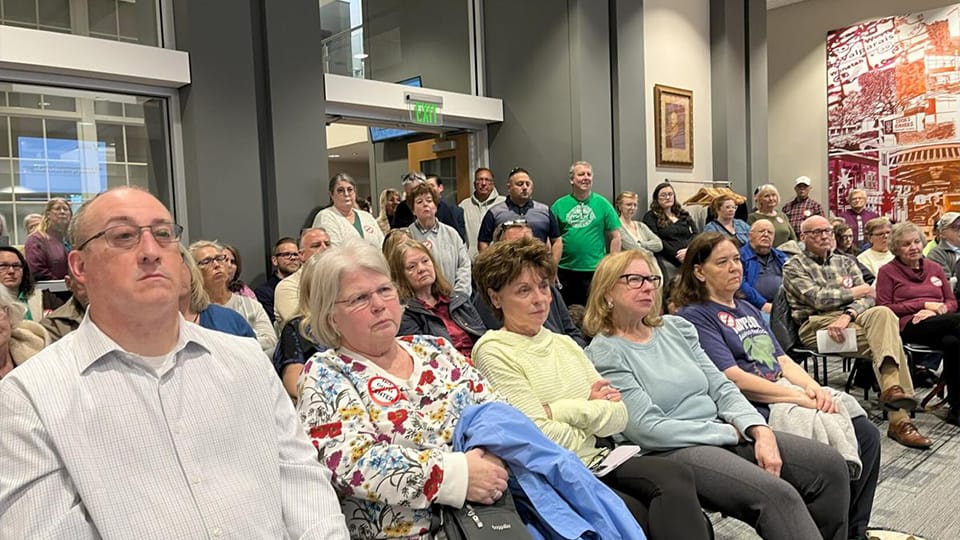 Onlookers watch a public meeting in Valparaiso on March 10, 2025 regarding a data center proposal. (Photo courtesy Times of Northwest Indiana)
-
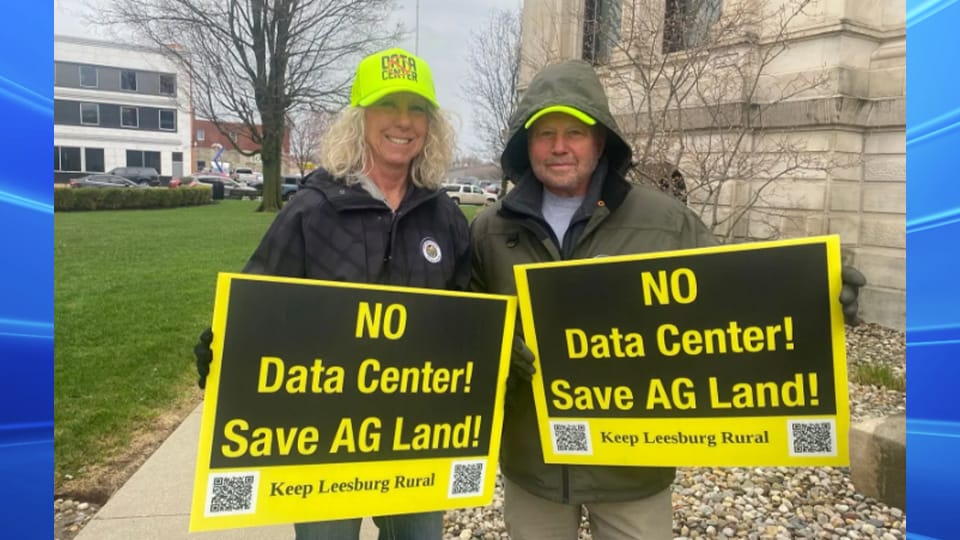 Two people sport hats and signs signaling opposition to a proposed data center in Kosciusko County. (Photo provided WSBT)
-
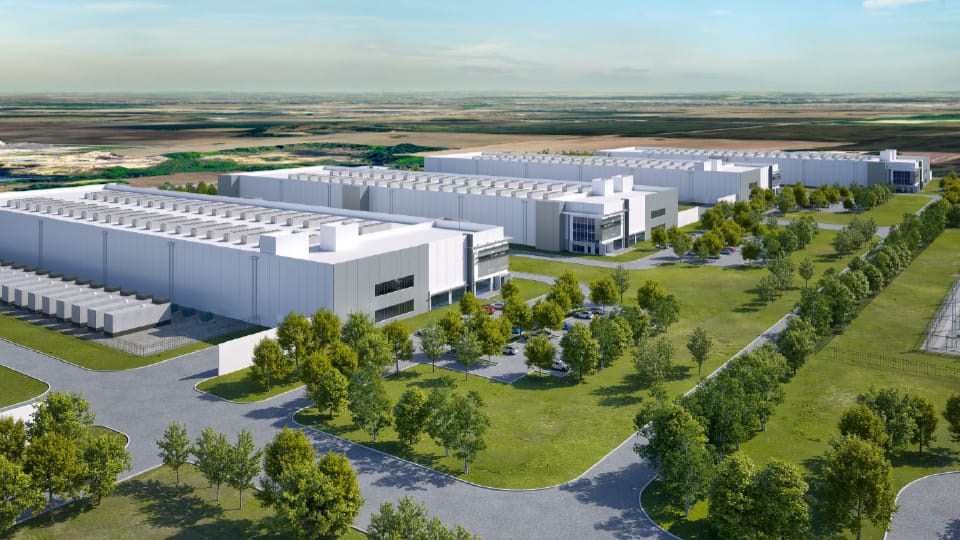 Rendering of Prologis’ proposed data center project it hopes to build in Kosciusko County. (Rendering provided, Prologis)
Wendy Reigel recalls the day, about a year ago, when a neighbor told her about a plan before the Chesterton Town Council to bring a data center to the northwest Indiana city.
The project would have gone in right next to her house, so the former school teacher began searching around online for what data centers were about.
She didn’t like what she found.
“If you spend five minutes Googling data centers and hyperscale data centers, you’re going to find lots of reasons immediately why you don’t want that to be by your residence,” Reigel said. “We ordered professional signs and we wrote flyers and we did a ground campaign for the next couple weeks and the neighbors jumped in.”
Due in part to Reigel’s organizing, Dallas-based Provident Realty Advisors withdrew its plans for the $1.3 billion project in June of last year.
At the time, Provident’s decision was an anomaly. Indiana’s legislature passed a law in 2019 which offers significant tax breaks of up to 50 years for operators of qualified data centers. On the heels of that legislation, data center operators have flocked to the Hoosier state driven by low taxes, cheap and plentiful land and solid supplies of power and water.
In most cases, local officials have sided with developers, signing off on the projects that stand to bring in major revenue. In the last year and a half, tech giants Amazon, Google, Meta and Microsoft have all announced or started work on billion-dollar data center campuses at sites across the state.
But more recently the data center tide appears to be ebbing, as multiple communities in Indiana have successfully pressured local officials into shutting down projects.
In northwest Indiana, data center proposals have been scrapped in Chesterton, Burns Harbor and most recently Valparaiso. In Kosciusko County, not a single member of the county’s zoning board or commissioners voted to rezone land for a data center proposed by industrial real estate giant Prologis.
“We were just trying to protect our community from a very large industrial thing coming in here. And all the side effects that could come, such as water loss, electric, more traffic on our roads, all those things,” said Reagan Templin, who helped organize opposition to the Kosciusko County project.
Grassroots movement
There aren’t glaring similarities between the Indiana data center projects that have recently been voted down. The developers are different and most were voted down before design specifications were released.
In more urban northwest Indiana, there was opposition from homeowners in upper-middle class subdivisions worried about property values and noise. In Kosciusko County, those speaking against the data center were mostly farming families who feared the loss of prime agricultural land.
But in each community where data center proposals faltered, there was overwhelming public resistance.
Reigel recalls making signs and going door to door when she started campaigning against Provident Realty’s project in Chesterton. When Provident pulled that plan and pivoted to Burns Harbor, people started reaching out to her asking for advice.
Though she’s helped organize resistance to numerous data centers in northwest Indiana and has been in contact with allies around the country, Reigel says she views herself more as an educator than a leader.
“It’s not me going and leading and just convincing everybody in northwest Indiana or Porter County that data centers are bad. That’s not what it’s about. It’s people reaching out to me going, ‘Hey, how did you start? What facts did you use?’” Reigel said. “It just happened spontaneously. It turns your life upside down. So I’m just at a point in my life right now where I’m able to give some time.”
Both communities lamented the secretive nature of data center projects, which are often rife with non-disclosure agreements and unnamed or undetermined end users.
Complicating the equation is the fact that data center developers only bubble up if there are landowners willing to sell. That has the potential to put community members at odds with each other as opposed to rallying against an out-of-state corporation.
In Kosciusko County, Prologis contacted Tim Polk, hoping to buy his land. Polk is well known in the community and had owned the acreage for generations. That has a tough pill to swallow for Jamie Moneyheffer—one of Polk’s neighbors who also has local roots going back over 100 years.
“A lot of the families in this area are generational and the folks were in the thick of it with everyone else,” Moneyheffer said. “So a lot of people were hurt. They were upset because to them, this was just a business transaction, but to the rest of us, they were jeopardizing our lives, our health and our livelihoods.”
Polk has not responded to interview requests from IIB.
Getting the word out
Social media has been an effective tool for organizing opposition. Reigel and her crowd run a Facebook group that has more than 3,300 members dedicated to news about data center projects in the northwestern part of the state.
In Kosciusko County, Reagan Templin realized early on that Facebook would be the best way to keep the rural community informed. Drawing on her limited experience managing a page for a local FFA chapter, she started a group called “Keep Leesburg Rural.”
The page has a logo and posted almost every day about upcoming meetings and anti-data center literature. Templin and her husband even drove up to New Carlisle to take video of Amazon’s project there which they used to make a political-style attack ad against Prologis’ project.
Social media helped spread the message, but elected officials don’t vote against millions of dollars in tax revenue based on likes.
“You got to show up. [You] Have to show up to these important meetings, and to make your voice heard, to hear what your elected officials are saying,” said Reigel.
Reigel and Templin both said they encouraged their communities to contact local zoning officials and anyone who would be voting on the projects. That required community members familiarizing themselves with how local governments work and who their elected officials were.
Templin said members of the Keep Leesburg Rural coalition chipped in to hire a lawyer to speak on their behalf at public meetings. She also recalls people telling her they would go to Kosciusko County Commissioner Bob Conley’s barbershop and tell him their thoughts on the data center while getting their hair cut.
The results in both places were packed public meetings with people sporting anti-data center signs and prepared speeches.
And elected officials took note.
After a lengthy public meeting in March, Valparaiso Mayor Jon Costas released a statement announcing that developer Agincourt was pulling their zoning request.
“Our citizens have spoken decisively that they believe this is a project that is not in the best interests of the city. I will, of course, honor that decision,” Costas’ statement read in part.
Conley, the Kosciusko County Commissioner, similarly noted the groundswell of opposition when he voted against rezoning for Prologis’ data center project on April 22.
“The Valparaiso mayor said it very succinctly: ‘Our citizens have spoken.’ Our area plan department has spoken, and now your county commissioners are speaking,” he said.
For Templin and Moneyheffer in Kosciusko County, there’s a feeling of relief.
“I felt so proud to be a part of this community, just the way that everyone came together and that it felt like we were fighting this battle against all odds,” said Moneyheffer, who likened the vote to the Biblical story of David fighting Goliath.
For Reigel, the struggle continues. There’s another data center proposal in Porter County for the small town of Wheeler.
“It’s chaos. It’s causing chaos. And so what I try to do is bring some humanness to the situation, some empathy and some really hard freaking work,” Reigel said.