
‘Not a reasonable and prudent location’: Kosciusko County Commissioners shut down data center plans
Subscriber Benefit
As a subscriber you can listen to articles at work, in the car, or while you work out. Subscribe Now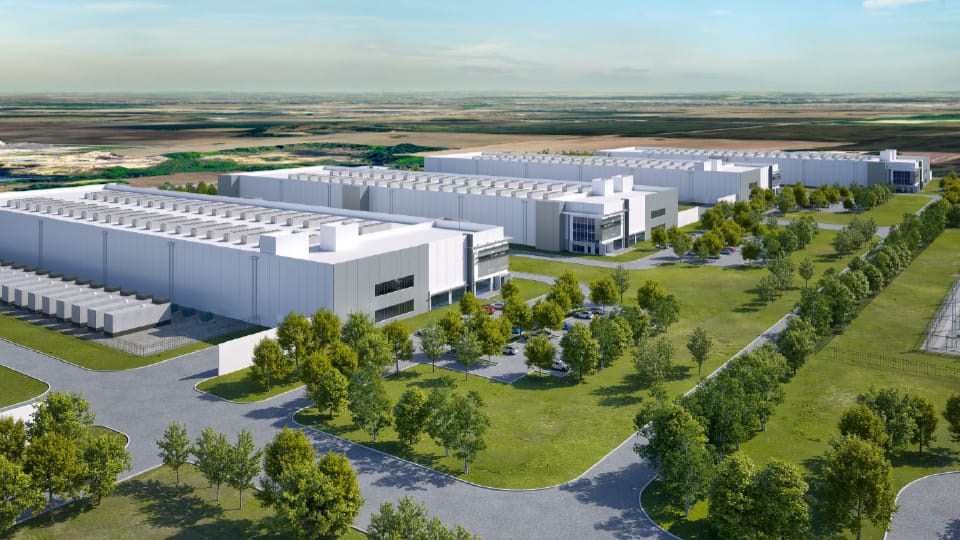
A plan by the world’s largest industrial property company to build a data center in a rural Indiana community has failed to get off the runway, as Kosciusko County Commissioners on Tuesday unanimously voted down a request to rezone land for the project.
San Francisco-based Prologis had hoped to rezone around 550 acres of farmland a few miles west of Leesburg for industrial use. The company planned to build a data center it would later lease out to a yet-to-be-determined end user.
But between Kosciusko County’s plan commission and commissioners, not a single official voted for the rezoning, with the prevailing sentiment being that no industrial development should go in the heart of the county’s farmland.
“The rezoning of property should be denied because it is not a reasonable and prudent location for this type of development.” said Kosciusko County Commissioner Sue Ann Mitchell before her “no” vote Tuesday.
Commissioner Robert Conley noted the staunch, organized opposition to the data center from members of the community, who once again turned out on Tuesday to speak against the measure.
With the zoning denial, Prologis will no longer pursue a data center project in the county. The company’s senior vice president of data centers, JC Witt, told commissioners Prologis was interested in the Kosciusko County parcel specifically because three power lines converge at the site. Extending or rerouting those lines is apparently a nonstarter.
“I’ve heard multiple times ‘We’re ok with data centers, it just can’t be in this location.’ I will just tell you from the individual who’s trying to build a data center—it’s not going to be another location,” Witt said. “This location wasn’t chosen because the land was cheap or…it’s easy to push around an agricultural community and put what we want there. That’s not at all why we chose this land. This land was chosen because it was the least disruptive way to access a unique resource this county has, which is massive amounts of power with those lines converging at that location.”
A Prologis spokesperson put out the following statement Tuesday afternoon.
“We are disappointed by today’s outcome. The proposed project would have brought high-income jobs and diversified the county’s sources of tax revenue, allowing for new investments in local infrastructure, schools and more. Given the one-year moratorium before we can reapply for approval, we do not plan to continue pursuing this project.”
Data center plans
The request before the county called for the rezoning of around 550 acres of farmland north of County Road 700 N and west of CR 300 W, about three miles northwest of Leesburg.
The landowners agreed to a voluntary stipulation that, if rezoned, the acreage would only have been used for a data center.
Prologis said it would have built the data center and then leased it to another user. Prologis projected the site would have added around 300 jobs if fully built out.
Proponents of the development again emphasized the massive projected increase in tax revenue a data center would bring. Prologis claimed the center would have resulted in over $300 million in property taxes over 20 years, compared to a little over $350,000 over the same time frame if the acres remain farmland.
Prologis did not give a total cost estimate for the project.
Local residents who spoke at Tuesday’s meeting echoed concerns about water and power usage and the loss of prime farmland. Some, like Beth Lamb, feel there are “no guarantees” Prologis would be able to build the project on time given the unstable economic landscape or that they would stay in the area if the center became outdated or unprofitable.
Others, including local attorney Jack Birch, questioned why Prologis couldn’t work with the local power company to extend power lines to a less objectionable, urban site.
“All we have to do is get some right of way and extend some power lines—a minor inconvenience as opposed to putting this monstrosity in the middle of the most productive farmland in our county,” Birch said.