
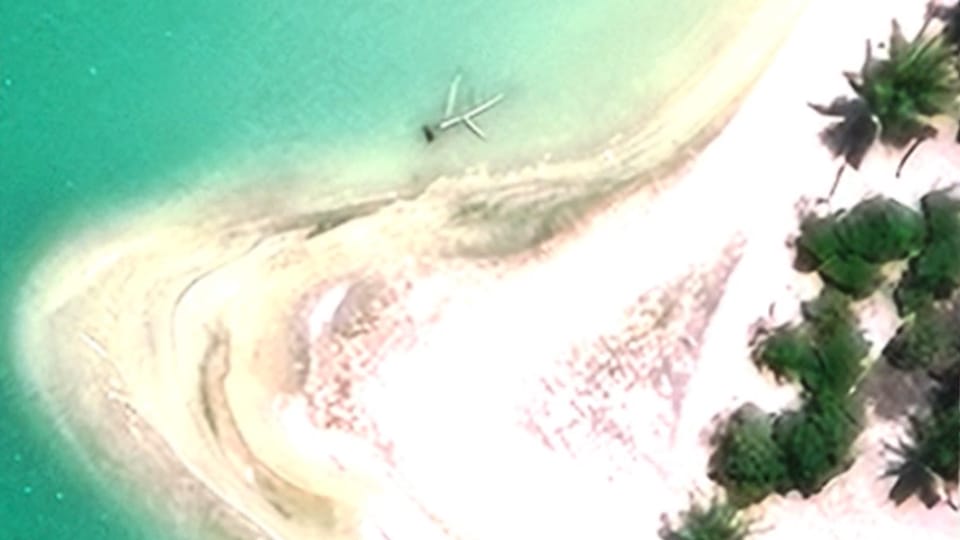
An expedition to locate Amelia Earhart’s lost aircraft led by the Archaeological Legacy Institute that also includes researchers from Purdue University has been postponed to 2026.
Purdue and the ALI said Monday that the team is still awaiting additional clearance from the Republic of Kirabati before it can begin the expedition, which was originally slated to begin next month.
Known as the Taraia Object Expedition, the team was set to visit Nikumaroro Island, where a visual anomaly known as the Taraia Object was first identified in satellite imagery in 2020.
During a virtual news conference, ALI Executive Director Richard Pettigrew said the decision, while disappointing, does come with a silver lining.
“We’ve made a lot of progress. Our plans are very much advanced. We’re pretty much ready to go. Our team is ready to go,” Pettigrew said. “But I think that actually, on balance, this is a good thing because it gives us more time to prepare, and I think that will only make this a more successful project than it was going to be already.”
The expedition team was set to launch from Majuro in the Marshall Islands on Nov. 4, sailing about 1,200 nautical miles to Nikumaroro. Researchers planned to spend several days investigating the Taraia Object to see if it is the Lockheed Electra 10E flown by Earhart and her navigator, Fred Noonan, before mysteriously disappearing 88 years ago.
Purdue said the team continues to work through additional stages of permit approval process with the Kirabati government. In the meantime, the oncoming South Pacific cyclone season means that a safe departure cannot take place for several months.
But Pettigrew said the extra time will also help further cultivate the relationship with the Kirabati government.
“We want to design this project as a cooperative project between us and the people of Kirabati,” he said. “The more conversations we have with them, the more we share with them plans that we have, the more we hear their reactions to it and their thoughts about it, the more we able to develop that relationship and move forward as collaborators.”
A specific timeline for launching the expedition is not yet known, due to a number of factors, Pettigrew said.
“We have to make sure that the vessels that we had retained are still going to be available at that time,” he said. “We’re in discussions with the ship company that we’re working with. And there are other factors too, such as the personnel that we have on the team; we need to make sure that everybody is on board with any new dates that we set up, and there may be other considerations as well.”
Steve Schultz, senior vice president and general counsel for Purdue, added that at the absolute earliest, the expedition could begin in April after the cyclone season ends.
Schultz said earlier this month that if the Taraia Object was confirmed to be Earhart’s plane, the aircraft would technically belong to the Republic of Kirabati because it’s located in the country’s territory. However, Purdue plans to work with the government to make a deal to fulfill Earhart’s wishes to have the plane returned to the university to be put on display.
“We did submit…an artifacts curation plan that talked about what we would do with artifacts that we found on the island,” Schultz told reporters Monday. “That is part of our application, and that’s under consideration by the government.”
The extra time will help both entities raise funds for the expedition, an effort that Schultz said is going well, though he did not say how much money has been raised to date.
Pettigrew noted that the expedition has been four years in the making, so adding a few extra months to the timeline will not make much of a difference in accomplishing their goal.
“We’re just going to have more time to team build and to establish our working relationships,” Schultz said. There’s going to be some interesting stories to come out of this really historic expedition, and so I think it allows us to collaborate between Purdue Research Foundation and Archeological Legacy Institute to get a little more clarity around who’s going to tell what story to come out of this, because they’re going to be multiple great stories to tell.”