
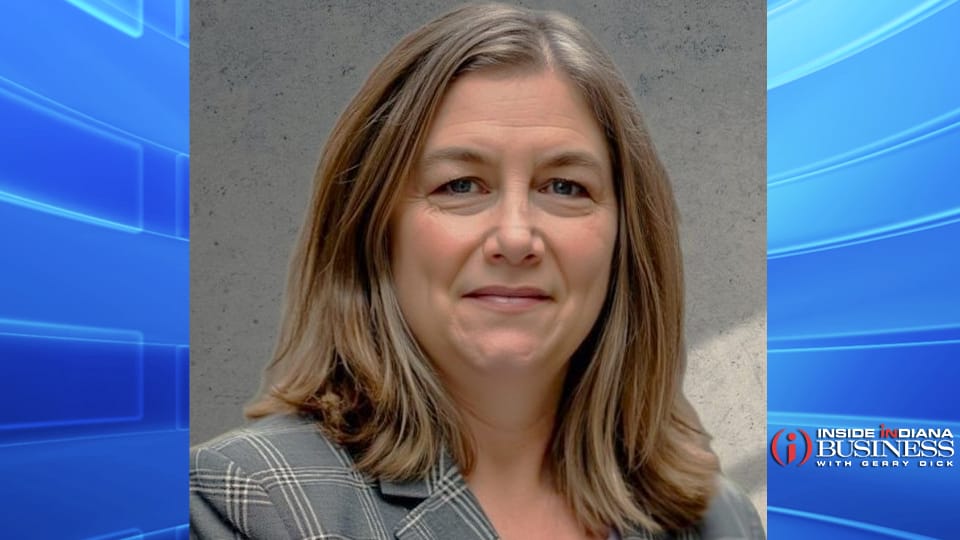
Dr. Darla Hoover began her role as superintendent of the Evansville Vanderburgh School Corp. on July 1. She succeeded Dr. David Smith, who retired after 14 years in the position and 43 years with EVSC.
Hoover spoke with Inside INdiana Business about her history with EVSC, the challenges facing the school district and her goals as superintendent.
This interview has been edited for length and clarity.
Tell me about your background with EVSC.
I was a student in the EVSC. I attended from the first day of kindergarten until I graduated from high school. After college, I majored in chemistry, and I worked in industry for several years. Then I went back to my alma mater, Bosse High School, and taught chemistry. I was a chemistry teacher and have been a department chair for science, P.E. and health. Then I was a high school assistant principal and a high school principal.
Then I moved to the central office. I’ve had two different roles before being superintendent. I was the director of high school support and then most recently the chief of schools and instructional core, which gave me that lens of all grade levels over schools and the academic departments, content directors, our counseling staff, our family and community partnership staff, English Learner, Special Education, and then stepped into the superintendency July 1st.
Why did you want to take on the superintendent role?
I love EVSC. I love teaching and learning. I saw an opportunity to lead the district I love, and it has done so much for me. I believe in what we’re doing here. I believe in the potential of our district, its students and our community. It was this opportunity to give back and contribute at that level. And I believe we can be a district where all students can succeed.
What are your short-term goals?
Setting a positive tone for our students and staff. Being present, working on trust with all stakeholders. I am doing that through frequent communication, open and transparent communications with staff, parents and our community leaders.
The other short-term goal I have is to be out as much as I possibly can be, listening and learning from everyone to help shape some longer-term goals about where we want to head and who we want to be.
What are your long-term goals?
What I know already is a big goal for us is to be a district where all students are successful. What that means for us is making sure every child has the resources and support they need so they can exceed and excel.
The second area that is going to remain important for us is creating a place where teachers and staff feel supported and valued in their work. We want to make sure our educators have everything they need to support student success.
And then a third area is developing partnerships with our families. We want them to be true partners in education with us, and we want them to choose EVSC as the best place for their children to learn and to grow.
What are the challenges facing EVSC?
There’s a national teacher shortage, and, for Evansville, we don’t attract a lot of people outside of this region. So being mindful of needing an excellent teacher in every classroom. And we’re thinking about what we can do to ensure we have that teacher pipeline. One of the things we’re doing is growing our own program. That’s at Reitz High School, where we’re getting high schoolers into the pipeline to become our next generation of teachers.
Another area that is also a national trend we’re seeing is getting students post-pandemic back in school all the time. It’s critical for students to be in school every day. If they’re here with us, they will learn, and we can get them to graduation. But if they’re not here, that’s difficult to do. That’s rooted in a couple of things. Student mental health is part of it and always being mindful of connectedness to school and sense of belonging.
What opportunities lie ahead for EVSC?
We have many opportunities. One that’s particularly exciting is the new high school diploma. This freshman class is the first class for the new diploma. It’s exciting because it allows for much more personalization. The idea behind the new diploma is that students are charting their own pathway to either enrollment in college or employment, so they’re leaving with the skills they need to be gainfully employed or enlistment.
Once a student chooses their pathway through different kinds of course exploration, surveys, being in the field, then they’re building coursework toward their path and their opportunities to earn seals. A lot of that involves being out in the field. It’s about real-world experience. The opportunity is to develop strong partnerships within our community so there are field placements for students and opportunities for them to learn from people doing that for a living.
There are a million things schools can work on. I say this to our people all the time, “We can do anything, but we can’t do everything.” As a superintendent, one of the things that does excite me is helping to provide that clarity and focus, knowing sometimes the best thing we can do is to narrow what we’re trying to do so we can be good at that.
You’re the first female superintendent at EVSC. What does that mean to you?
It’s certainly such an honor. When I think about that and our young girls we’re educating, it’s a testament to limitless possibilities. If you’re willing to work hard, and you’re determined, and you get your education, you can do anything you want to do. That goes for young girls, but it also goes for any student. If you’re in poverty, it doesn’t matter what your background is, you can do anything you put your mind to if you’re willing to work hard.
You are also a first-generation college student. How has that influenced your career?
I think about how important my support system was growing up. I was raised by my great-grandparents, and they loved me, but they were not educated. They believed school was important, and they made sure I got there every day. But my teachers took care of me. They knew I was smart, and they helped nurture that education in me for my whole life.
They helped connect me to college. They made sure I had what I needed, scholarship-wise and connections, and helped me navigate the whole process from high school into college. Then I came back because school was an important part of my life. That’s why even when I was in industry working as a chemist, I felt this calling to come back to school where I had felt so successful.
The new school year is underway. How’s it going?
It’s been an awesome start to the year. We’ve had lots of back-to-school bashes and popsicles with kindergarteners and color runs. And our educators have been mindful of welcoming families and students back.
We are also proud of our IREAD success. We were invited to the State Board of Education by Secretary [Katie] Jenner because of the growth we experienced. In third grade IREAD, we had over a 10% increase for our district, which is huge. They asked for three of our schools to come up, and those schools were chosen because they were all 25% or more in growth.
One of our schools had over 40% growth in IREAD pass rates, which is important because this past school year was the first year where there was a mandatory retention for students who weren’t proficient in reading by the end of third grade.
That kind of success set a positive start to the school year and a belief in educators that they can do it. It was an army of us working together with our families, students and teachers all going in the same direction. And the results were fantastic.