
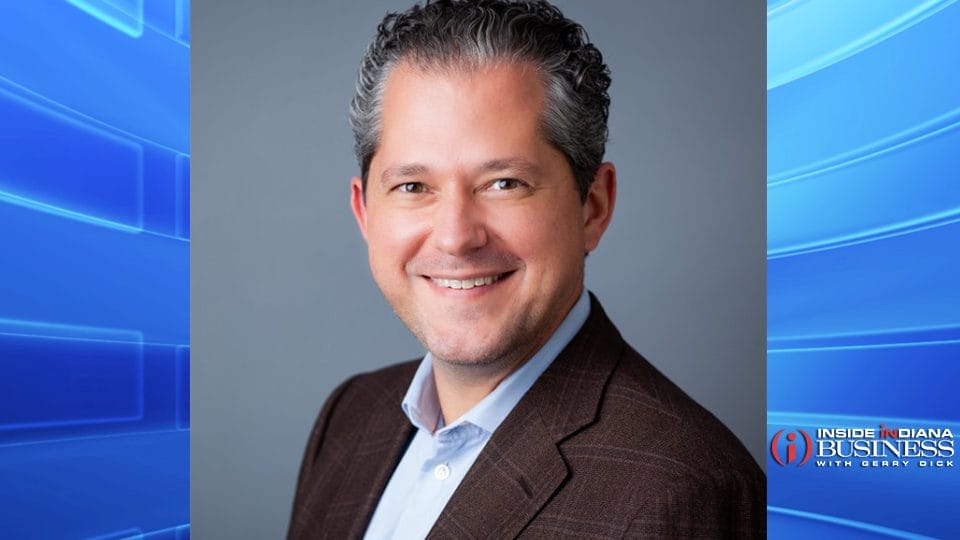
Allied OMS, a Texas-based, doctor-led network of oral and maxillofacial surgeons, is expanding into northern Indiana through a partnership with Oral Surgery Michiana.
Founded in 2019, Allied OMS provides management services designed to let surgeons focus on patient care while supporting business and administrative operations.
Inside INdiana Business spoke with CEO Dan Hosler on why Indiana was a next step in their Midwest expansion and how Oral Surgery Michiana will maintain its culture and clinical control while gaining resources to expand into neighboring communities.
This article has been edited for brevity and clarity.
Can you start by explaining what Allied OMS is all about?
Allied OMS is a network of oral and maxillofacial surgeons. We created a management services organization that really helps surgeons focus on patient outcomes, taking away some of the administrative and business burden. We started five years ago with four oral surgeons that combined with two business folks. Allied is really a different kind of model where we put the doctors first. To this day, we are still the only doctor-led, doctor-owned and doctor-governed platform out there.
Why was Indiana and specifically the South Bend-Elkhart area, an important next step for Allied OMS?
One of the most important ways in which we have grown has been through word of mouth by our doctor-partners. So when we’re looking to find areas to grow, we certainly look at demographic trends. We look at areas where there’s new family formation or other opportunities to expand access to patient care in specific markets. And then if we can couple that with battle-tested referrals from our existing surgeons, those are the kind of groups that we’re looking to partner with.
Hosler speak about what Allied OMS considers in bringing on new partners and why Oral Michiana Surgery is a good fit
How does this partnership fit into your broader Great Lakes regional strategy?
We’re really big fans of the Midwest. It really aligns with our core values of transparency and staying laser focused on patient care and also doing it in a fun and friendly setting. So we’ve got a number of practices in Illinois, Michigan and now in Indiana. So this is a natural extension of some of the groups with whom we’ve partnered.
What unique strengths does Oral Surgery Michiana bring that made them the right partner?
The culture that they’ve built inside of their practice was second to none. The doctors there have a really strong culture with their employees. They do an amazing job providing safe and effective oral and maxillofacial surgery in a comfortable setting for their patients. So we were really impressed by what they had built. Also we think there’s opportunities to help them grow into neighboring cities and maybe even a neighboring state. Taking that great model they’ve built and extending that further into the community to provide greater access to care.
How is partnering with Allied OMS different from a typical MSO or private equity model?
In traditional private equity investments or MSOs, you find doctors that really want to turn the keys over to somebody else. They do a great job clinically but they really don’t want to be involved on the business, finance or even the governance side. So what we’re trying to build is for the doctors that are curious to better understand how the business works. Those are the types of partners that we seek out. Folks that want to both be surgeons and business folks as well. So Allied provides that opportunity for them to be able to scratch that itch, so to speak.
Some describe these arrangements as acquisitions, but you’ve avoided that term. How does the partnership actually work?
I don’t like the word acquisition; it sounds very sterile. Especially in the delivery of health care, it’s so important to talk about the spirit of partnership. On the clinical side, the doctors always stay in complete control, that’s a non-negotiable. But on the non-clinical side, Allied OMS can help take over some of the administrative tasks. Perhaps it’s benefit administration, retirement benefits, things that we can do better, cheaper and with greater quality than typically an individual practice might be able to do on their own.
We purchase a small stake in the company and the doctors tend to reinvest quite a bit back into the parent company, so that they can participate in the growth, not just in their own practice, but the growth of all of Allied OMS as a whole.
How do you balance growth and operational skill without eroding the identity of partner practices?
It’s a really delicate balance. So we try to take more of a Socratic approach. Meaning if we can provide data, case studies and examples of how we’ve made data-enhanced decisions in other cases, it tends to make it easier for the doctors to be open to trying something different. By having this large network of surgeons, it means that we’ve got a number of case studies. Michiana is a multi-doctor practice under a single roof and we have a handful of practices that look just like that.
So the key for us is, how can we connect the dots on providing best practices but doing that in a segmented way, so that it makes sense for those doctors? So being able to look at different cohorts of practices and sharing best practices in a way that makes sense for that particular group.
How do Allied OMS and its doctor partners benefit financially, and how are profits reinvested?
The most important thing is that Allied is still majority owned by its doctors. So when we say Allied is making a profit, really it is our doctor partners that have the opportunity to participate in those profits. So as we grow in size and we get more efficient, there is a possibility that we can also create more profits.
Our doctors are very passionate about giving back to the community. We have a number of doctors who sponsor mission trips to other countries where they provide oral and maxillofacial surgery care in places that don’t even have access to basic dental care. Those are the things we like to reinvest in the business. There’s also cutting edge technology. Sometimes it can be really expensive to invest in the cutting edge clinical technology that many practices have. So we frequently also reinvest profits back into some of those newer technologies that provide for a more seamless and a more technology enhanced experience for the patients as well.
How many surgeon groups do you currently partner with, and are you looking at additional partnerships in Indiana or the Midwest?
We definitely are. Over the last five plus years, we’ve partnered with over 80 surgeons in 14 states. We’re constantly adding new locations or opening new ones, so it’s always a moving target. One of the things that’s most powerful is that word of mouth that I described. So as soon as these doctors joined, we immediately had additional conversations about other people that they know, that they thought might be a good fit. So hopefully we’ll have a chance to connect again and talk about the next great partnership.