
Q&A with ClimbX Drone Solutions CEO Alfred Pinto
Subscriber Benefit
As a subscriber you can listen to articles at work, in the car, or while you work out. Subscribe Now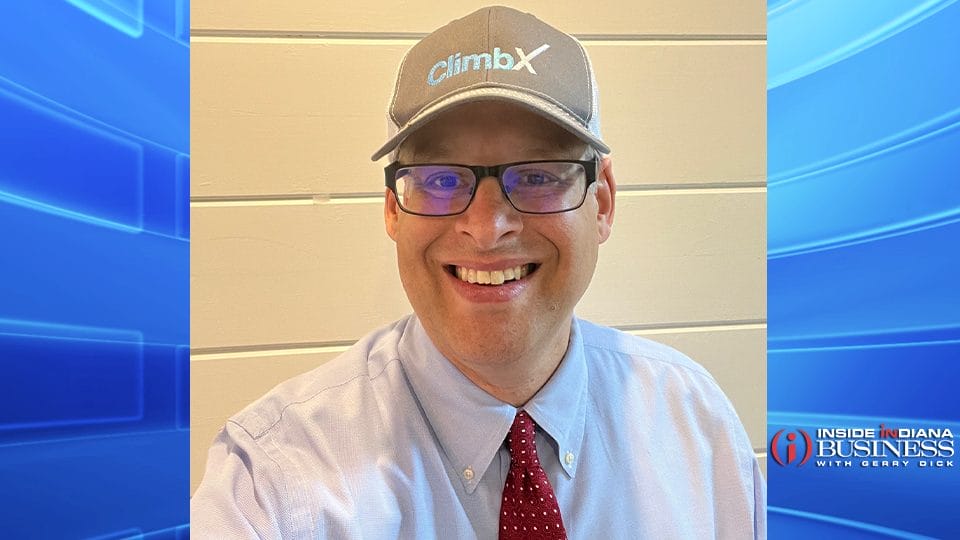
When Alfred Pinto and his wife, Carrie, set out to start a new business, they weren’t just looking for a new venture—they were looking for something innovative. Their search led them to a cutting-edge solution in an old-school industry: using drones to clean buildings.
What began as a fascination with technology and a shared love of working outdoors has turned into ClimbX, a growing company that’s bringing drone-powered cleaning to hard-to-reach places across the South Bend-Elkhart region.
Inside INdiana spoke with Pinto about his career switch from health care to cleaning, getting a drone pilot license, business funding and competition within the industry. This article has been edited for brevity and clarity
How did you decide to get into the cleaning business?
My wife, Carrie, is actually the one that founded the business. It’s a woman-owned business. We were looking for something in the cleaning industry and she came across these drones that clean buildings. I’ve always liked technology. When my son was younger, we’d fly drones. This brings technology to a more traditional industry, and they can clean at heights that are traditionally impossible. We saw that there was a big need with buildings greater than four stories and we went from there. What I love about it the most is working outside, without any real background in the industry. We’ve learned really quickly, but my wife gets the credit for starting it.
We’re a year old. In that period, we’ve just grown tremendously. We’ve had the opportunity to work with Memorial Hospital, Saint Joseph Hospital, Indiana University South Bend, Penn High School and JC Penney at University Park Mall. We’re looking forward to this upcoming season from May through November. Water and freezing temperatures don’t collide very well..
So what does the company do in the off-season?
During that downtime we are meeting with businesses, universities, health systems, school systems, business owners and planning for the upcoming season. It gives us three or four months to plan and it also gives us time to spend with our four kids.
Who supplied your cleaning drone?
The company that we bought our drones from is called Apellix out of Florida. They’re made in the United States, which is great. Among the other drone makers we researched, they had a very solid, robust drone. It’s designed to be very stable and clean efficiently. The drone is big, almost like a mini helicopter. It’s not like the small ones that we take with us to the beach. This machine is large.
How does the drone work?
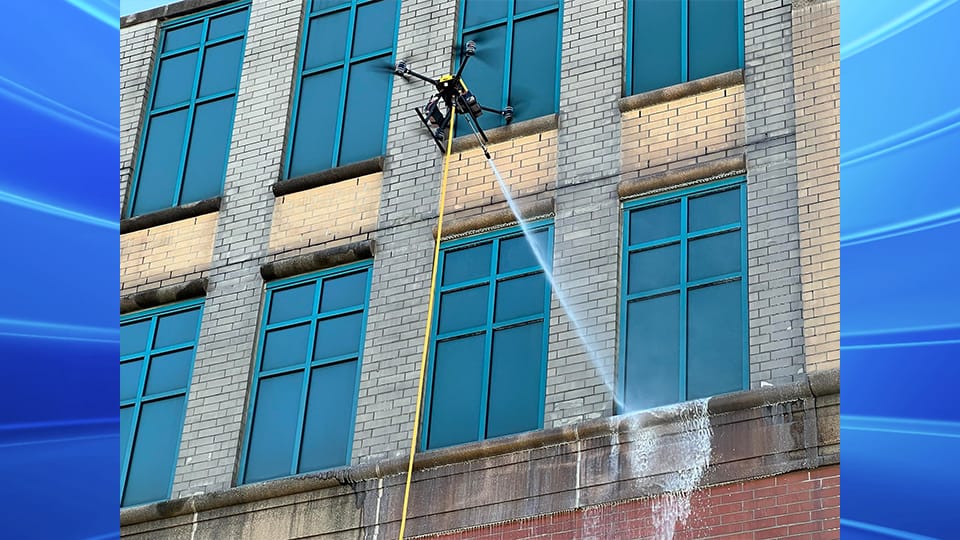
We have a truck on the ground with water and several cleaning solutions in different tanks. The drone is tethered to the truck by a hose. It flies up and we program the area that we want to clean. It pulls the cleaning solutions and the water from the ground station. and then we do the cleaning. And so as part of that cleaning, we’ll apply the cleaning solution, let that dwell for 10 or 15 minutes, depending on how dirty it is, and then we’ll rinse it with polished, de-ionized reverse osmosis water. Traditionally, somebody would need to climb. You would need scaffolding or a lift, and there’s dangers with all of those. This takes a lot of that out of the equation. The drone itself can clean 100 square feet per minute. It’s efficient and it does a nice job.
How many drones does the company own?
We have one and we’re considering adding a couple more. We’ll just have to see how this season goes. Each drone requires an FAA license. I have that license, and we’ve got another drone pilot that we work with. Some of the buildings that we fly for are in certain air spaces, so they require approval through the FAA to fly in those areas. So there’s a little bit of footwork that goes into planning the jobs that we’re doing.
How did you and Carrie acquire the capital to start this business?
We invested personally and First State Bank up in Middlebury, Indiana, has been extremely supportive of our venture. They funded part of the business and have been right there with us.
The drone itself is around $40,000. We invested heavily because we want to have the best commercial grade, on-the-ground equipment and that cost right around $100,000. Cleaning solutions can run from several hundreds to several thousands depending on the size of the job. So we invested roughly $150,000 to get this started because we didn’t want to cut any corners. When we’re out on the jobs, the quality of our equipment is reflected in the work.
Pinto talks about the capital costs to start ClimbX.
What did you do before starting ClimbX?
I’m a chiropractor. I’ve been in health care for over 20 years and I love it. We put together some really wonderful practices and scaled our health care business. My son, who’s 20 years old, is also a part of our business. But I have to be honest. It’s been a nice, fresh change from being inside a white, sterile building all day long. I really love being outside and trying to figure out a brand new profession. I’ve gained a whole new respect for the service industry and what it takes to make sure that the job is done right, on time and on budget.
So what did it take to make the switch to drone pilot?
I’d flown drones recreationally with my son as he was growing up; this is at a whole different level. When you’re flying something that’s up to 50 pounds next to buildings, there’s a lot to consider: wind speed, trees, buildings and setbacks on those buildings. So it’s a lot different from flying something small and agile in an open field. It’s been a challenge to transition from a recreational drone to a commercial drone. But the stability of the drone makes it easy.
To fly a drone commercially, you have to take the Part 107 examination through the FAA. There was a lot of study time that went into not only learning how to fly the physical drone, but also all of the regulatory and safety issues. With all of the recent attention toward air safety as well as drone safety, I’m really glad that I had the training because everything makes a lot more sense.
I’ve never been that guy that just picks up and moves to an island somewhere but I’ve always wanted to be that guy. This is kind of my little move away from what I was doing. We’ve got a great staff in our clinics right now. It’s allowed me the ability to try something different and I love it. And the staff that works on these jobs are just great people. They really take a lot of pride in what they’re doing. People have been receptive to Spine and Joint Associates. That’s privately owned by my wife and I.
Are there any features that you think will enhance the drone cleaning experience?
Some of the companies that we’ve talked to have drones where we basically map out the building, program it and then we’re just there to watch it. Once it’s programmed, it’s autonomous. Currently there’s avoidance collision software in the drone, so it won’t even let you get past a certain distance to a building or a tree.
Batteries are always an interesting component because flight time is generally 20 minutes. If we’re cleaning a big hospital, we’ll bring the drone back down, change out the batteries and recharge the expired batteries. I think that as technology improves, drone battery life will also improve. But again, carrying something very heavy on two batteries, so I understand why they deplete. Admittedly, when we bring that drone down, it gives the pilot an opportunity to mentally rest and also gives the eyes a break. So it’s probably a good safety feature that the batteries last about 20 minutes.
Is there any competition within the region in this space?
There’s not any direct drone competition in this region. Drone technology has been around for a while, but it’s only now being adapted to the cleaning industry. As we accept drones more and start to use them to deliver packages, for example, we’re probably going to see more competition.
Are you open to competition within this space?
It’s the same thing with my health care business—competition is the best thing for our country. There are so many buildings and facilities that need to be cleaned. We could not clean them all. Collaboration within the industry is so important. There’s a gentleman that I work with out of Atlanta. I’m able to call him with any questions that come up. I like competition, I like collaboration. I think that’s how we all move forward. So I’ve never been one that is territorial. I think it’s counterproductive.
What advice would you offer to entrepreneurs looking to enter the drone service industry?
I would do research on the different drones because they all come with slightly different features and components. The other thing is understanding that it’s not like going out in your backyard with your son to fly a drone. There’s a lot of planning. If you’re cleaning a glass building, there’s parameters you have to consider, such as temperature. When it’s a 90-degree day in Indiana, that glass is a lot hotter than 90 degrees.
Cleaning technology is a neat venue to get into. It’s growing but you have to love to clean. My power washing experience with the deck in my backyard and my driveway prepared me. I loved the cleaning. I was a volunteer firefighter for years and we got to spray water. So I’ve always had that fascination with cleaning and water. You need attention to detail and you can’t cut corners when it comes to drone cleaning.