
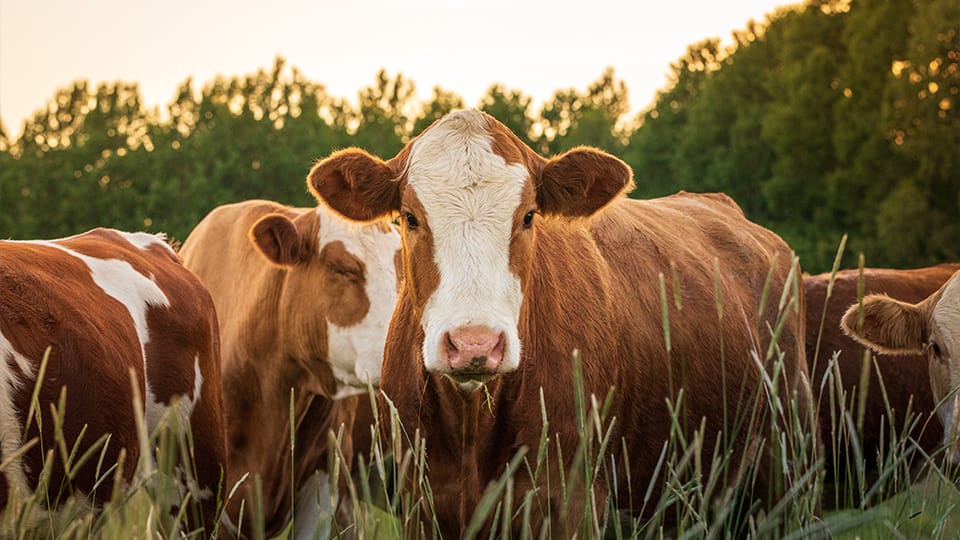
Farmer sentiment saw a modest increase in October, driven largely by optimism among livestock producers about their farm conditions, according to the latest Purdue University/CME Group Ag Economy Barometer.
The barometer is calculated monthly from a telephone survey of 400 agricultural producers across the country. The barometer rose just three points to a reading of 129 last month.
Purdue said in a news release that farmers’ appraisals of current conditions highlight a “tale of two economies.” While livestock producers have a more positive outlook, supported partially by record profitability in the beef sector, crop producers are expressing a more pessimistic view.
“U.S. farmers are adjusting to ongoing economic pressures in different ways,” said Michael Langemeier, the barometer’s principal investigator and director of Purdue’s Center for Commercial Agriculture. “Livestock producers are seeing strong returns and remain optimistic, while many crop producers are contemplating management changes for 2026 to help cope with tighter margins.”
Last month’s survey was conducted between Oct. 13-17.
According to Purdue, the divide between livestock and crop producers also extends to their outlook on the farms’ future performance.
The survey asked farmers if they thought they would see widespread good or bad times on their farms over the next five years. Only 30% of crop producers said “good,” compared to 70% of livestock producers.
Respondents also continued to cite high input costs as the biggest concern for their farming operations with 41%, while 28% said lower crop and livestock prices. Langemeier also noted that 11% said policy was their biggest concern.
“That tells me that they’re pretty confident that the policy makers are probably going come through … if we need some additional government payments or something like that,” he said. “They’re worried about the fundamentals, and the fundamentals to me are where are prices? Relatively low for the crop sector, [and] relatively high for the livestock sector, and then those high input costs that are with us ever since COVID ended.”
Most producers also say they expect the U.S. Department of Agriculture to provide some sort of compensation for weak commodity prices similar to the 2019 Market Facilitation program. More than half of respondents said they would use such payments to pay down debt, with another quarter saying they would use it to strengthen their farm’s working capital.
You can connect to the full survey results by clicking here.