
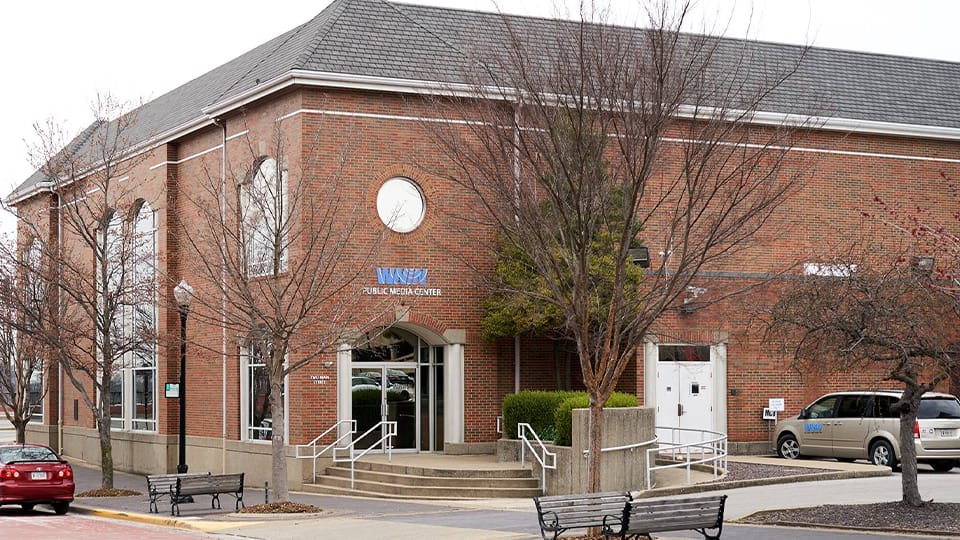
WNIN Tri-State Public Media in Evansville is continuing to feel the effects of state and federal funding cuts earlier this year.
The nonprofit, which operates both a radio station and television station, said this week that it is eliminating five staff positions and making several program cuts beginning next month.
The WNIN board of directors recently approved its budget for the 2026 fiscal year, which begins Oct. 1, and reflects a $1.5 million loss.
“Unfortunately, with the loss of state and federal funding, there is no way around the need for significant budget reductions,” President and CEO Tim Black said in a news release. “It is a sad but unavoidable situation for our dedicated team, and the loss will affect operations throughout the organization.”
In addition to the staff cuts, some employees who are remaining on staff will be reorganized and take on additional responsibilities, WNIN said.
The organization said its core PBS and NPR programming will remain on the schedule, and no programming or on-air staffing changes are planned. Most of the programming that is being cut airs on weekends and includes much of the station’s lifestyle content.
WNIN said much of its local, community affairs programming will continue with a focus on digital distribution.
An an interview with Inside INdiana Business earlier this month, Black said the loss of government funding effectively cut nearly 50% of WNIN’s budget.
“We have a healthy reserve account that will take care of us for one year. And with some of the budget cuts that we’re making right now and planning for the next fiscal year, we will probably be fine for at least two years,” Black said. “At that point, we’ll have to see some kind of government funding come back into the picture. It’s going to be tough after a couple of years down the road.”
WNIN noted that from April to August, local donors gave an additional $345,000 to the nonprofit, doubling the amount of local donor revenue during the same period last year.
While the additional dollars didn’t cover the stations’ funding gap, WNIN said the gifts did prevent the need to move money from station reserves to its general operating account.
“We absolutely appreciate the recent support from the community,” Black said in the release. “It comes as no surprise because the community has always supported us. But, when you are attempting to fill a hole of $1.5 million, even such huge local support only begins to scratch the surface. It is so important for local donors to continue their giving and, more importantly, to consider becoming a sustaining member of WNIN by committing to a monthly gift to the stations as opposed to a one-time donation.”
Black said he is confident that WNIN will have the time and ability to make fundamental changes to the organization’s business model, including forming a local task force comprised of business and community leaders to help remodel WNIN’s services.