
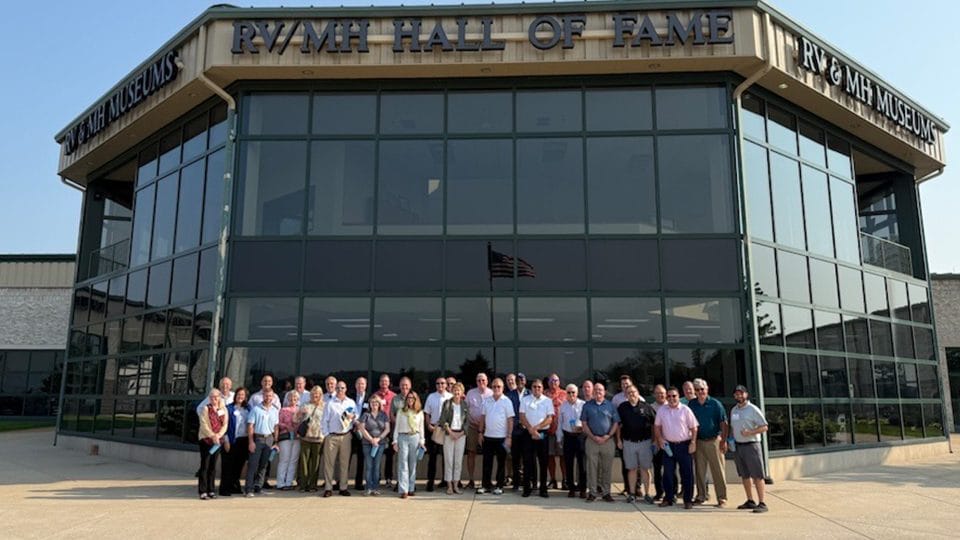
Leaders from across Indiana gathered in Elkhart this week for the Indiana Conference of Mayors annual conference, where a session titled “Building Public-Private Partnerships for Housing and Quality of Life” spotlighted Elkhart’s multi-decade strategy to transform itself from a manufacturing hub into a livable, culturally vibrant city through intentional collaboration between the public, private and philanthropic sectors.
Mike Huber, director of development services for the city of Elkhart, outlined how two decades of planning and investment have led to what he called transformative amenities and growing regional appeal. He credited a consistent focus on long-term vision, shared investment and projects that serve both residents and visitors.
“People are choosing where they want to live rather than where they want to work,” Huber said. “So how do we prioritize quality of place as a core economic development diversification strategy?”
Elkhart’s economy remains heavily dependent on manufacturing, especially recreational vehicles, which makes it particularly vulnerable to national economic swings. Huber said city leaders began turning to quality of life investments in the early 2000s as a way to stabilize and diversify the city’s prospects.
Early projects including the Lerner Theatre renovation and the creation of the Wellfield Botanic Gardens were the result of intensive community planning and collaboration. In more recent years, the River District has emerged as a major mixed-use destination, supported by both public infrastructure investment and private development. Combined, these initiatives have generated more than $250 million in investment and tens of thousands of new visitors annually.
“If we’re going to build resident amenities, we need to think about how to take them to a level that’s beyond just serving the residents,” Huber said. “Can we make them a regional draw and have a greater impact in the community?”
Dave Weaver, founder of WeImpact, a key development partner in Elkhart’s River District, said the projects emerging from these partnerships aim to redefine what civic pride looks like.
Weaver speaks about building to invoke a sense of civic pride in residents.
“We want our communities to be much more livable and loveable but we can’t do that by building” the status quo, Weaver said. “We have to invoke a sense of civic pride. We have to hold ourselves to a higher standard.”
Weaver emphasized that WeImpact blends private investment with philanthropic intent, often targeting projects overlooked by traditional developers. The organization, working with a dozen local families, has helped bring in hundreds of new housing units, parks and restaurants to the River District. He said the philosophy is rooted in Elkhart’s entrepreneurial legacy, with equity for developments sourced entirely from local partners.
“Our communities weren’t built by people coming to save our communities,” Weaver said. “They were built by local entrepreneurs and local leaders.”
Mayor Rod Roberson pointed to the Elkhart Health and Aquatics Center, built after the local YMCA shut down, as a standout example of what public-private collaboration can achieve. The $70 million project hosts major national swim tournaments and serves as a local recreational space.
It is a catalyst that drives a lot of the other activities that occur inside of our city,” Roberson said. “It brings people to Northern Indiana. We’ve seen Tennessee, West Virginia, Virginia, USC, etc.”
Looking ahead, Elkhart’s Aspire initiative and Downtown Master Plan will continue expanding the city’s footprint of public-private development. That includes redeveloping the Benham neighborhood with more than $50 million in new housing, mixed-use space and upgraded public amenities.
The city also plans to convert the former Elkhart County Courthouse into a mixed-use downtown anchor and build a 5,000-seat outdoor music venue to amplify Elkhart’s cultural heritage.
“This is really the leverage for us from the catalyst side,” Huber said, “to help us move into creating some new private investment as we expand into the rest of downtown.”
Speakers at the conference emphasized that Elkhart’s transformation is a model not only because of its outcomes but because of its structure, a deeply localized approach to planning, guided by residents and funded in partnership with local families, businesses and government.
“You all have the opportunity to take those assets and actually make sure that the planning occurs locally but the vision is seen beyond,” Roberson said in his closing remarks.