
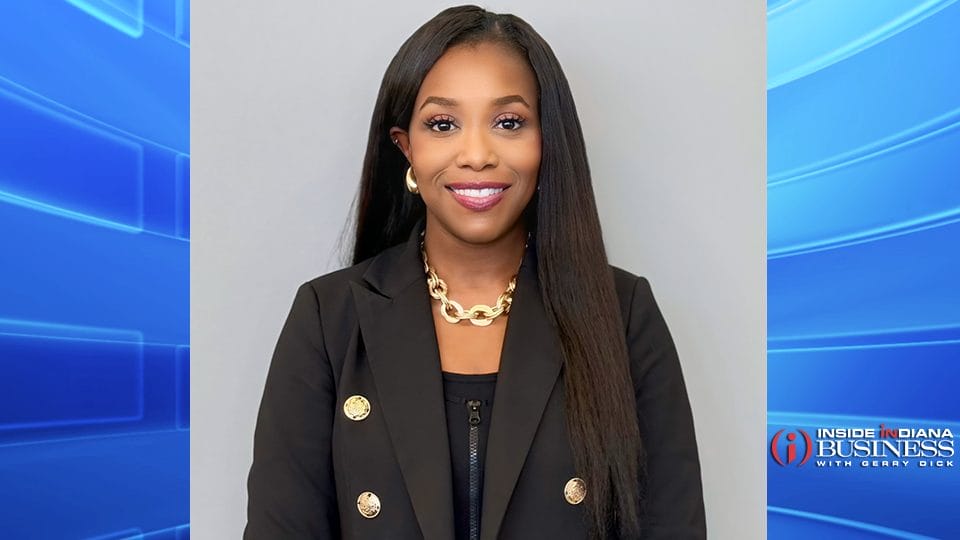
Karrah Herring, who served as Indiana’s first chief equity, inclusion and opportunity officer under former Indiana Gov. Eric Holcomb, is back in South Bend leading her own consulting firm, Lucy Mina Group.
During her time in state government, Herring launched the Indiana Equity Data Portal and led initiatives focused on public health, early learning and workforce training.
Inside INdiana Business spoke with Herring about her work advancing data-driven equity initiatives at the state level, the lessons she learned navigating bureaucracy and how she’s helping organizations build authentic workplace cultures with her business.
This article has been edited for clarity and length.
What lessons did you take away from leading the state’s equity data portal project?
That was one of my favorite projects with the Holcomb administration. My team worked on that portal for about six or seven months with a bunch of different stakeholders. The most interesting lessons for me were related to the Department of Justice side. I was on a commission at the Indiana Supreme Court and some of that data showed that there were disparate sentencing numbers for similar crimes, when the data was disaggregated by race. We saw longer sentences for people of color, and that was concerning. We wanted to figure out why the numbers were so disparate across race, ethnicity. Unfortunately, we didn’t get to do that because the administration changed.
Another interesting piece was health care and the lack of resources for people from low socio-economic backgrounds, people of color or people in rural Indiana who often didn’t have the same access. Looking at how they were showing up for hypertension, diabetes, smoking, obesity, in comparison to those that lived in more affluent areas. Then the infant mortality rates were really concerning and that was one of our big, big pieces that we were looking into with the State Department of Health. The final area that was top of mind for me was early learning literacy rates. Kids were not reading at the levels that they should have been. Sadly, that data portal no longer exists but it was helping us to set strategies, legislation and policy to address some of those inequities. I’m really disappointed that the portal went away.
What do you see as your most significant accomplishments in that role?
There were so many things that we did. The Data Portal was one and I had so many people from counties across the state tell me that they used that to get grant funding. Those numbers really helped them to make the case for why they needed to invest into certain projects.
With our “Next Level Teams” training, we trained over 10,000 people on the concepts of civility, compassionate listening and constructive communication so that we could have conversations across lines of difference in a healthy way. We were also part of helping make sure that the Dolly Parton Imagination Library was funded across the state. I know that they’ve rolled back on some of that but we were part of some big initiatives with the State Department of Health and the Department of Education that we’re really proud of. So those two, but there were probably 15 or 20 that I could rail about.
How did you manage to get things done within government bureaucracy?
A lot of it is relationships. People can have an idea of who you are or what you’re doing, but until they actually sit down with you, they don’t really understand. In order for people to understand that, you have to build relationships—a lot of coffee meetings, a lot of lunch meetings, going to events, etc. But the other thing that was really important for me was just emotional intelligence.
There were times when I knew it was the right moment to push a certain initiative, then there were times I knew it was important to be quiet in that moment and just sit back. That made some people on my team and in the community frustrated, but not every moment is the moment to act. So relationships and emotional intelligence are key. If you don’t have those two things, it’s going to be really hard to get anything done, not just in government but in any organization that you work with.
Herring shares lessons from her experience navigating bureaucracy.
When the equity office was disbanded, what did that moment teach you about sustaining this kind of work?
We knew it was coming. I worked for a governor who was very in tune with what the next wave of politics would look like, so he prepared us for that. By the time the office was disbanded, I had already helped all of my direct reports find jobs. It just taught me that you have to really lean into those relationships. There are so many people across the state that I met while I was doing this work, and they’re carrying on the work in various other ways. People change, faces change, regimes change, priorities change. But when it’s something that’s important for the people you’re serving, you have to try to make sure you infiltrate that across the populations you serve. So that the work continues even if you aren’t there.
What led you to start working for yourself instead of taking another job?
My trust in God, because I really did look for other jobs. I actually applied for jobs with large organizations in the state and nationally. But God really just dealt with my heart that it was time for me to lean fully into being an entrepreneur. And I absolutely love it. I’ve had my consulting firm since 2016 but I’d taken four years off from doing any work with my consulting firm so I could focus on state government. So when the calls didn’t come back for an interview, I just leaned into my faith. I prayed about it, then I started getting calls to do speaking engagements and work with leadership teams and C-suite executives on building culture. I just leaned into it and now I am 100% devoted to Lucy Mina Group.
What is the focus of your consulting work through the Lucy Mina Group?
When I was at Notre Dame, I was in HR for most of those years. My work really focused on building excellent teams through accountability and mission-driven values, really looking at how you can get top performers to excel at their best state. I’m a lawyer by training, but I never did DEI work prior to working with Gov. Holcomb. I was always in HR on the legal side or on the public affairs side. So the advantage for me is having been in human resources for so long, having worked in public relations and having worked in state government, I got to work across a wide breadth of industries. Right now, unfortunately, if a company tries to do diversity, equity, inclusion training, they become a target. So some of my clients want to make sure that they’re not doing anything that’s going to make them a target of the federal government or a target of the attorney general. I tell people to focus on culture, values, mission and emotional intelligence. The pendulum will swing back the other way at some point in time, we hope. But right now, it’s dangerous for organizations to even think about doing anything that’s specifically labeled as diversity, equity and inclusion.
We hear that word culture a lot. What does it really mean for a company to have a work culture?
The most important things are the values and mission of your organization. If you don’t have strong values, if you don’t have a strong mission, it’s going to be hard to build culture. That’s one thing I really appreciated about working for the University of Notre Dame for 10 years. I knew the culture because I knew the values and I knew the mission. We talked about leadership, excellence, accountability, integrity and teamwork. Those were our five values. It still drilled into my head to this day because we lived that. Your leaders have to really live the mission and live those values because you actually have to live it from the top, so that your employees know that it’s authentic. It’s one of the best ways to retain top talent and to avoid litigation. If you have really good values and a really good mission and really good culture, you’re going to avoid litigious situations.
What do you hope to achieve in this next chapter?
Well, I’m really excited about the consulting side of our firm. Because my business has grown quite a bit in the last eight months, I get to do two really cool things. I get to do the HR and lawyer stuff, which is great, but I also have the interior side of my business, Lucy Mina Interiors. About 25 years ago, my parents purchased an 80,000 square foot plaza that our ministry lives out of. We have some businesses that rent from us. We own a fitness center, we own a salon and I’ve done a lot of the renovations.
I would also love to partner with developers across the state building affordable housing units. People think when you are designing a home, you have to spend a lot of money. You don’t. So I would love to partner with some of those affordable housing developers so that those who haven’t always had access to beautiful spaces can feel like they’re in a really beautiful space too.