
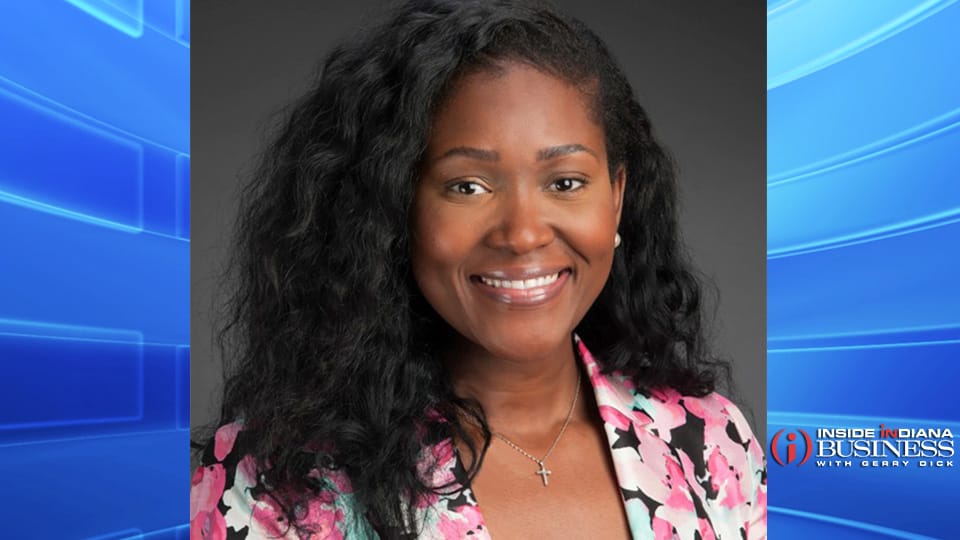
In June, the University of Southern Indiana named Dr. Xavia Harrington Burton as director of the Pathways to USI program. The initiative guides first-generation students, 21st Century Scholars, Pell Grant-eligible students and students from rural areas through their undergraduate experiences.
Burton previously held teaching roles at USI, including assistant professor of education and instructor of education. She spoke with Inside INdiana Business about her leadership goals for the Pathways to USI program.
This interview has been edited for length and clarity.
What was your background before this new role at USI?
I was a teacher who was interested in the difference I could make in young people’s lives. I quickly realized that I could make just as much of a difference in higher ed. I’ve spent a few decades working with young people trying to make a difference in any way that I could.
I was a teacher, then a teacher trainer and a supervisor, and then an instructor and an assistant professor. Much of that time was spent here at USI. Every professional or voluntary role that I’ve ever taken has allowed me to work directly with young people. I’m proud of that fact and excited to be back at USI and continue to have the opportunity to work with young folks.
Describe the Pathways to USI program.
The mission of the program is to help Indiana students who are from rural communities or 21st Century Scholars or the first ones in their families to go to college. The university is using the generous Indiana Commission for Higher Ed grant funding to make this work and to make this a staple in the lives of our students.
What Pathways to USI focuses on is the transition from high school to college and then college to the workforce. It’s important for us to focus on our youth, not just the intersections between education preparation and talent pipeline, but that statistically challenging first year of college and that transition, and then to stay with them until graduation.
I get to do some cool programming, intentional and research-backed events and mentorship and chats with students and check-ins with them and talking to them about the academic part of the collegiate journey. I also get to have some serious conversations with them and help them navigate all the stressors of life in college.
It’s important not just for the state of Indiana, but for this region. We’re building up well-trained future professionals who we desperately need to stay in this region and take on some of these high-demand jobs.
Why were you interested in this role?
My interest is genuine and probably based on two things. One is based on my experiences with my college director. The students at USI affectionately call me Dr. B., but I had a Mrs. Tisdale as my college director, and she was kind and supportive, but she was no-nonsense if she saw that we were underperforming. In a lot of ways, I hope to be that for someone else.
The other important area is that my entire PhD studies, that journey, my dissertation at the very end of that journey, were all about this, all about helping rural students, first-generation students and Pell [Grant] eligible students not just get to college, but graduate. Every class I took was about that. My dissertation, almost 200 pages of it, is about that.
What are your short-term goals?
Getting more students to graduation. Helping more students who have that dream of college attainment get to see that as a reality. Not everyone will want to go to college. Some students know exactly what they want to do, and that may require community college or trade school. But this is for those students who, like me, grew up watching Saved by the Bell and them talking about going off to college, and being like, “I want to go off to college, too.”
What about long-term goals?
Build up the next generation of Hoosiers. Not just thinking about the task of working with individual students each day, helping them tackle their struggles, the day-to-day challenges that come along with being a college student.
Long term, it would be the 80+ students who are right now utilizing this new Pathways to USI model, helping them become hardworking, law-abiding Hoosiers, hopefully benefiting this region, but if not this region, benefiting Indiana and allowing them to be well educated, be able to take on some of these career paths that we desperately need them to take.
What challenges do you foresee with the program?
These are real students with real careers and real jobs and part-time jobs and managers who are fighting for their time, and they have real families and sometimes real familial struggles. But they also tell you, “I want college, I want to accomplish this goal, and I don’t care what’s happening behind the scenes; I need you to help me make it to the end.”
The ups and downs of life as it pertains to young people in college make me nervous sometimes. But the benefit for them is that they have the Pathways to USI staff to help them work through coping strategies. What should this look like? What can you do realistically? What should you not take on your plate right now?
How do you plan to strengthen community partnerships to create smoother pathways for USI students?
Over the summer, Pathways to USI students were in the community, not just doing community service, but going on business visits, getting to know some community partners.
They not only got an opportunity to get out and meet people with influence in the community and who may be doing cool things and one day they may be interested in post-grad, but also what if one day they are interested in an apprenticeship or an internship or they need a letter of recommendation?
Someone’s going to remember that they were at Tekoppel Elementary School passing out backpacks and meals to the young kids and their families. Someone’s going to be willing to offer advice about applying for an internship. Someone’s going to be able to connect them with some opportunity that might be right up their alley. Someone’s going to be willing to write a letter of recommendation because they took the time out of their day to give back.
What are your thoughts on making higher education more accessible and affordable for underserved populations?
What I can influence are the opportunities to get into the local middle schools and high schools to meet more students and their families, to help dispel some of the myths they may have about higher education in Indiana, to help share with them how the University of Southern Indiana continues to be the most affordable public institution in the state.
This year, I was excited to attend the board of trustees meeting and hear our fifth president talk about the importance of listening to, seeing and hearing students and their families and making the difficult decision to not raise tuition prices for another two years. I’m proud of that.
I’m excited to get into the community and start meeting with middle school students who want to go to college, but maybe haven’t considered USI. They’ve never come onto our campus and seen how beautiful it is and how breathtaking it is. They’ve never had an opportunity to experience college culture.
I know the president and others would be excited to see students on campus and to shake hands and to meet them and to ask them about their goals and their dreams for their future.