
The city of South Bend, in partnership with Goodwill’s The Academy, will host its first-ever Supplier Access Summit on Oct. 9 to connect small businesses across five counties with resources, education and contracting opportunities.
The one-day event, hosted by the Office of Diversity and Inclusion, will feature workshops, an exhibitor floor of city departments and a pitch competition aimed at helping entrepreneurs grow.
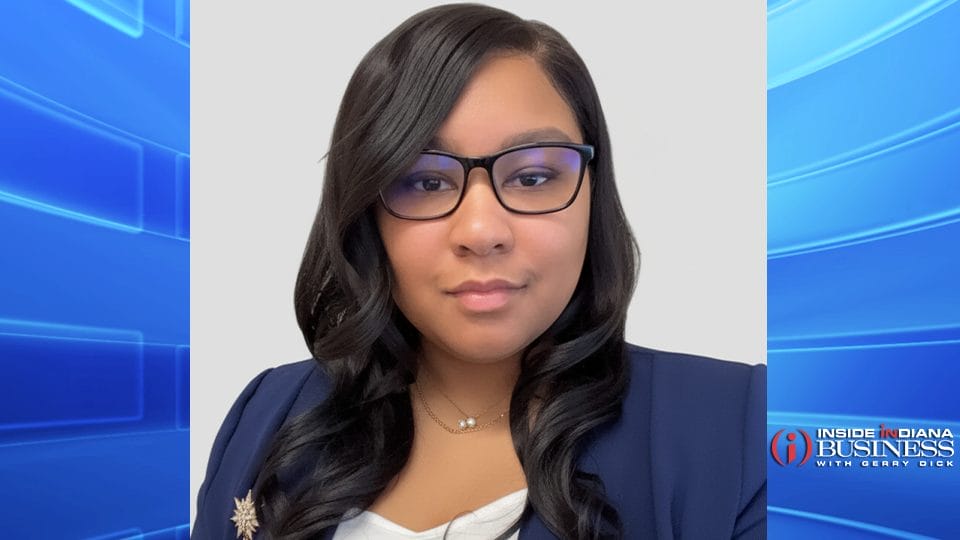
Inside INdiana Business spoke with Bianca Jones, manager of inclusion projects for the city, about the goals of the summit, the challenges small businesses face in securing contracts and why inclusion and equity are central to South Bend’s economic growth. This article has been edited for brevity and clarity.
What is the Supplier Access Summit?
The Supplier Access Summit is basically our way of bringing community members together—specifically small businesses in our local region between the five counties. So from St. Joseph, Elkhart, LaPorte, Marshall and Berrien County, Michigan, connecting those local businesses with resources, education as well as an opportunity to pitch their business. Just bringing everyone together to support our local homegrown businesses.
Why launch the Summit now?
The Supplier Access Summit is brand new. We are acting as the conduit to bring everyone together. We had an ordinance from 1988 that laid dormant for a while that focused on engaging more with minority and minority-owned businesses. We did a disparity study, saw that there was a disparity, turned around and built a program to make sure that we are being a little bit more intentional and inclusive with how we’re bringing in our local minority and women-owned businesses. The Supplier Diversity Program came out of that.
Jones speaks about the motivation behind the Supplier Access Summit.
How does the event give small and minority-owned businesses real access to opportunities?
One of the things that we decided to do is have an exhibitor floor consisting of city departments and partnering organizations. That way, business owners that attend this program will meet us in person and we can figure out what opportunities we have for you, where you can find them and what additional resources you may need.
For example, we have the Financial Empowerment Center, which is another initiative from the city of South Bend that focuses on getting individuals’ personal finances together. Small business finances and personal finances sometimes go hand in hand. You can’t get a business loan if your personal credit isn’t right. So we try to make sure that we’re thinking about this in a full holistic approach—not only providing standard education sessions covering marketing, financial access, entrepreneurial support, certification, contracting and procurement. It’s more or less, “Where are you at right now and how can we support you there?”
What are the biggest challenges small businesses face in competing for contracts?
The first challenge is finding the opportunities. When those new opportunities pop up, they always hear it after it’s been awarded. Now we know that there’s a communication issue; it’s not reaching the right people.
The second challenge that they have is access to capital. A lot of these businesses can’t give a more competitive price because they can’t buy raw materials in bulk. They have to buy them as the projects come. So financial access to become a little bit more competitive, not having to purchase at market rate.
And then the third thing is not knowing how to actually structure a bid to be competitive. I’ve heard from some small businesses that there’s a fear factor of being told no. My response is always that the best thing they can do is tell you no. Because now you know what doesn’t work. So how can you improve this for next time? And what can you learn from this situation?
How will the pitch competition work?
The pitch competition is really focused on finding businesses who will have a local impact on the community. So we are looking to identify a winner who would really impact the community and that has been in business long enough to need assistance. If they are at a standstill and need to be assisted with scaling a little bit more. If they have any special programs or training that they need. That’s pretty much what we’re looking for.
So far, we’ve received applications from our contractor-type businesses but I really want to see more applicants coming from the skilled trades. The prize is $2,000 along with the opportunity to utilize our services.
Are you planning to help them prepare for the pitch?
Yes. We have a pre-session called Pitch Perfect, going over what pitching looks like. I want them to know how to create a slide deck. Nothing crazy, just to drive the point home about their business. Showing them the free resources to use so they don’t have to spend any money. I’m narrowing it down to five businesses because we only have one hour to really go over each business, let them have their moment and answer questions. The judges would be city employees and I’m trying to get a community member, like a peer, because I think it’s super important to have your peers there judging this as well.
Why is inclusion and equity in business so important to South Bend’s growth?
Inclusion and equity is important to South Bend’s growth because it empowers its residents. We have a strong entrepreneurial community, as seen by the Small Business Entrepreneurship and Adversity Program and Hustle SBE. Even with our Small Business Assistance Suite, we had about 800 applicants. That lets you know that we have a robust small business community. Our support there brings dollars here, which builds up our neighborhoods. It’s a trickle down effect. You empower your residents, your residents empower your neighborhoods, your neighborhoods empower your city. One rising tide lifts all boats, that’s really where we’re trying to get to.
Will there be support for businesses after the summit?
Essentially, everyone who registered for the event is now in our list. So as we come up with new activities or workshops to engage those businesses, we’ll reach out to them. I try to make sure that when we’re hosting certification workshops, teaching our local businesses how to become Minority Business Enterprise (MBE) or Women Business Enterprise (WBE) certified through the state of Indiana. We host that workshop once each quarter.
We also have the Small Business Assistance Suite that focuses a lot on building up your back office. If you don’t have an accounting system, we help set it up at no cost. We help prepare business taxes once for the businesses that come through. We assist with marketing, and they also have a business coach to walk them through the process. So we open up as many opportunities as we can. If there’s a pre-bid meeting happening, we shoot that information out and we try to keep that updated on social media as well.
When is the next certification workshop?
We have our final minority, veteran and women-owned business certification workshop happening in October. We’ll be meeting for four weeks on Saturdays at the Technology and Resource Center in South Bend. There’s in-person and virtual options. We walk people through the steps for getting certified. That way they can be found for projects not just at city level but on a state level.
Do you work with other governments in the region on this effort?
We are trying to figure out if they have a program established. South Bend is kind of uniquely positioned. We have a Supplier Diversity Program that focuses on ensuring that we’re doing business with local, minority and women-owned businesses. So right now we’re trying to figure out if other organizations or other cities are interested in Supplier Access.
It’s not just about diversity; it’s about access for all—mom-and-pop shops, local businesses, etc. So that way we can keep our economics flowing amongst ourselves. So we have not quite cracked the nut yet. We’ve had some conversations but we’re still trying to figure out how we can all fit together within this process.
What role does the University of Notre Dame play in the summit?
We have two of their faculty members on the panel. Keith Sayer, he is the communications program director at the Nanovic Institute for European Studies, and Caylie Peet, lead consultant for supplier opportunity and engagement at Notre Dame.