
Swiss-based Roche announced this month that it has received U.S. regulatory clearance for a less-complex vitamin D test in the United States, which the company said opens the door to more efficient diagnostics using its mass spectrometry system.
Indianapolis-based Roche Diagnostics will handle the marketing and distribution of the test, as well as the cobas i 601 analyzer used by laboratories in hospitals and diagnostic centers.
The Roche Ionify 25-Hydroxy Vitamin D total assay received the “moderate complexity” designation from the Food and Drug Administration, marking the first such test using a mass spectrometry-based system to receive the designation.
Primary care physicians and other healthcare providers commonly order total vitamin D blood tests. Low vitamin D can cause issues with patients’ bones, muscles and immune systems.
The moderate complexity designation—under regulations set by the Clinical Laboratory Improvement Amendments of 1988—allows a test or lab to perform a wide range of diagnostic testing with structured quality controls and trained personnel, without requiring the most stringent regulatory oversight, Roche Diagnostics said.
“We’re excited because this technology is normally very complex,” said Laura Parnas, Roche Diagnostics’ senior leader of medical and scientific affairs. “Our innovation is really to make it easy for any routine laboratory to incorporate in their workflow.”
The company said it also has a robust U.S. pipeline of other tests planned for the cobas Mass Spec solution including steroid hormones, immunosuppressant drugs, therapeutic drug monitoring and drugs of abuse.
“The vitamin D is just the first of the entire menu,” Parnas said.
Roche’s cobas i 601 Mass Spec system is manufactured in Japan and its reagents—complex mixtures of biochemicals or chemicals used in testing—are made in Germany.
Roche said a wide variety of such mass spectrometry tests are already in use in Europe. Roche did not disclose the cost of the cobas Mass Spec systems.
Mass spectrometry is considered the gold standard in clinical diagnostics due to its precision, but its use has been limited by complex workflows, according to Roche Diagnostics. Mass spectrometry in a clinical lab uses ionization to analyze molecules, such as with a blood test for vitamin D levels.
“It will allow more labs to deliver highly accurate results efficiently, helping clinicians make better-informed decisions and ultimately improving patient care,” Roche Diagnostics North America CEO Brad Moore said in a written statement.
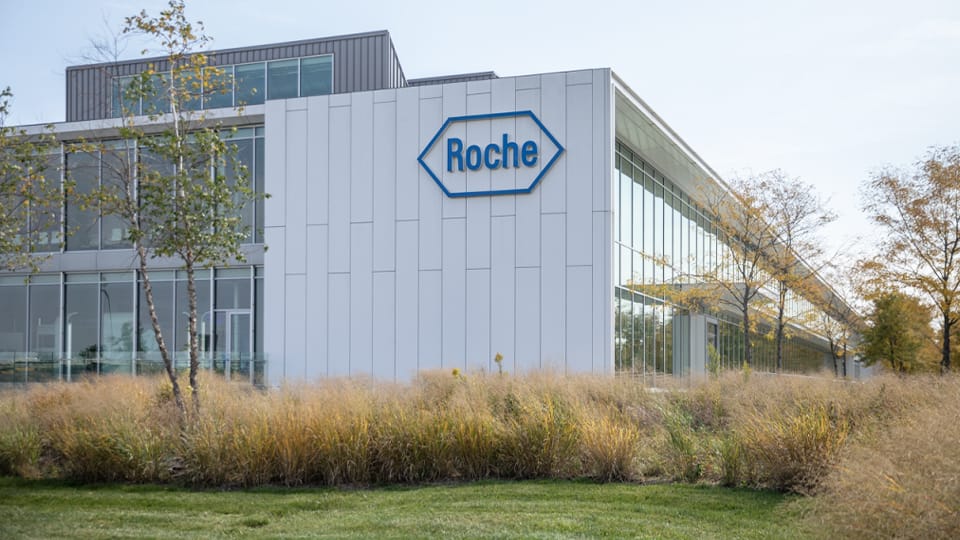
The Roche Diagnostics campus on the north side of Indianapolis houses operations that include U.S. research and development, laboratories, manufacturing, distribution and IT and administrative functions.