
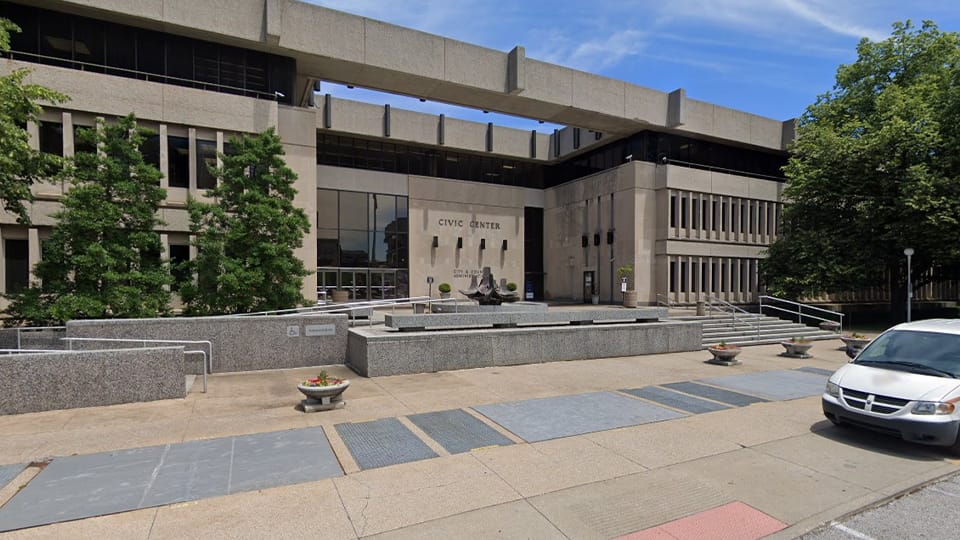
The Evansville City Council today is expected to introduce a proposed municipal wheel tax ordinance to raise money for road repairs in the wake of a new state law that afforded property tax relief to many homeowners but slashed funds for local governments.
Evansville is projected to lose millions of dollars in property tax revenue due to changes in state law following the passage earlier this year of Senate Enrolled Act 1, the city said in a news release. Meanwhile, another new law, House Enrolled Act 1461, requires cities to adopt a wheel tax in order to qualify for a new state funding stream for local roads.
“We all drive the same roads, and we all feel the impact when they fall into disrepair,” Mayor Stephanie Terry said. “This step ensures we can take real action beyond patching potholes. This will help us make sustained progress across our neighborhoods.”
Under the proposal, the owner of a passenger vehicle would pay $25 a year. A motorcycle owner would pay $15 per year, and the owner of a heavy truck would pay $35 per year.
The tax is estimated to raise about $2.7 million per year, the city said, which would be legally restricted to improvements such as street resurfacing, sidewalk upgrades and curb work.
“Revenue from the wheel tax will go directly into Evansville’s Road And Street Fund,” said the ordinance’s sponsor, City Council President Ben Trockman. “Most importantly, it will help unlock up to $4.5 million in state matching funds through the Community Crossings Grant—a major opportunity to improve and rebuild our city’s streets for everyone who uses them.”
Many local governments are expected to turn to new tax initiatives following the passage of SEA1, which is projected to save homeowners about $1.2 billion over three years in property taxes but cost local units of government $1.5 billion in tax revenues.
Evansville has had about $3 million available annually for street repairs and resurfacing, but even with additional state funds, the amount has been well short of the $12 million the city says is needed annually to keep roads from further deteriorating.
“Wheel taxes are going to be something you’re going to need to use,” Gov. Mike Braun recently told a Mayor’s Conference audience in Elkhart, according to the news release. “If you don’t do that, it’s going to be hard for the state to partner up in places that need even more for their own roads.”
The proposed ordinance is expected to be introduced at tonight’s city council meeting and reviewed in the coming weeks.