
Black entrepreneurs in South Bend-Elkhart region see growth amid persistent challenges
Subscriber Benefit
As a subscriber you can listen to articles at work, in the car, or while you work out. Subscribe Now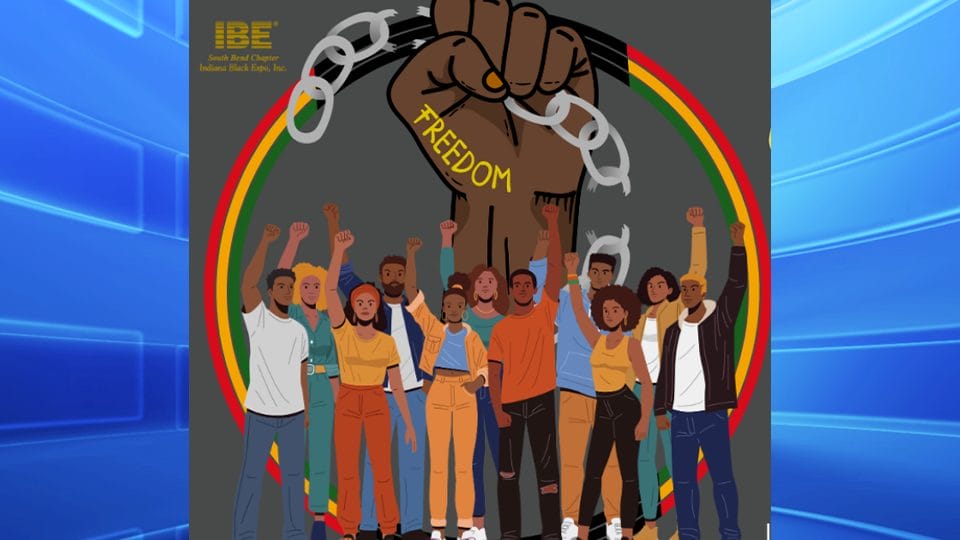
As communities across the country mark Juneteenth, a federal holiday commemorating the end of slavery in the United States, Black entrepreneurs in the South Bend-Elkhart region are navigating a moment of both celebration and reflection.
Local leaders said entrepreneurship among Black residents is growing, even as barriers like access to capital and commercial space continue to limit progress.
“Juneteenth is a celebration of freedom but with that freedom comes a responsibility as well,” said Levon Johnson, president of the Greater Elkhart Chamber of Commerce. “Part of that is growing in a way that impacts the communities that you’re in.”
A symbol of Black liberation and resilience, Juneteenth in northern Indiana has also become a time to spotlight Black economic empowerment. From mobile food vendors to aspiring manufacturers, Black-owned businesses in the region are increasingly stepping into the spotlight.
“There’s definitely some greatness that’s been happening,” said Latorya Greene, president of the Indiana Black Expo South Bend Chapter. “A lot of our entrepreneurs are coming up with innovative ideas for their businesses.”
Greene speaks about some of the new Black-owned businesses in South Bend.
Greene said South Bend has seen promising developments with new ventures like The Bend Lounge, Perry Vine winery and Backyard Vibes, which hosts live music and food events. Still, she said more support is needed to help Black-owned businesses thrive long term.
“Infrastructure funding for a lot of our Black-owned businesses is lacking,” Greene said. “I want to see a much better landscape in regards to our Black-owned businesses being afforded opportunities to tap into resources that may become available.”
Her organization’s Juneteenth celebration, scheduled for Saturday at LaSalle Park, will feature dozens of Black-owned vendors, musical performances, youth entrepreneurs and a scholarship awards ceremony. Greene said the longstanding community tradition has become even more meaningful amid recent national rollbacks of diversity, equity and inclusion initiatives.
“We lost some sponsors due to all the executive orders, but it just meant that there were new partnerships we needed to form,” she said. “Without them, there is no event.”
In Elkhart, where the Indiana Black Expo chapter is also hosting a Juneteenth celebration, the connection between economic development and cultural observance is front and center. Local performers, food vendors and youth dance teams will take part in the event, which coincides with the kickoff of the Elkhart Jazz Festival, at the Elkhart Public Library on Thursday from 4:00 p.m.
“It’s a party for a purpose,” said Robert Taylor, president of the Elkhart chapter. “We wanted to use Juneteenth as an opportunity not only to celebrate but to provide people with a place to find resources.”
Taylor said the chapter recently completed a 12-week business workshop with 35 Black entrepreneurs. He believes that while progress has been slow, Elkhart is entering a new era of inclusion.
“With this government, we are finally at a place where we can have uncomfortable conversations,” he said. “Our dollars really matter, and they are creating places and spaces where we can come and feel like we are part of the community.”
Still, he acknowledged key gaps remain. Elkhart currently has no Black-owned sit-down restaurants, though the food truck sector is showing strong momentum. Bill’s BBQ, the city’s only Black-owned restaurant, closed in February.
Johnson said the Chamber along with other small business support organizations in the region are seeing more individuals taking the business boot camps they offer, equipping them to beat the statistics of businesses that fail before year five.
Adding that more food businesses were switching to the food truck model because of the lower overhead costs, higher mobility and being able to keep their full-time job, Johnson said that he is seeing the biggest amount of growth in the food industry.
“Part of the challenge of being an entrepreneur is sometimes you hear no and you think that’s final and there’s no other place to go,” Johnson said. “There are clearly opportunities that are out there, once you have a good business model and can explain it. You just gotta find the folks that are willing to take the risk, especially in the restaurant space.”
Johnson said the Chamber’s Business Diversity Initiative Council and programs like the Gateway Mile Loan Fund aim to help bridge those gaps. But challenges persist, including lack of commercial space and insufficient education about available resources.
“Access to capital is still a challenge because of the things you need to even access those things,” Johnson said. “But the support systems are far more than they’ve ever been, and the number of folks willing to dip their toes in the water are more than ever.”
As Greene put it, the Juneteenth celebrations offer more than just a moment to reflect, they offer a chance to commit.
“We hope it will not be their only opportunity to patronize them,” she said of the Black-owned vendors at South Bend’s celebration. “But to actually go to their storefront as well.”