
Ground broken on $140M renewable natural gas plant in La Porte
Subscriber Benefit
As a subscriber you can listen to articles at work, in the car, or while you work out. Subscribe Now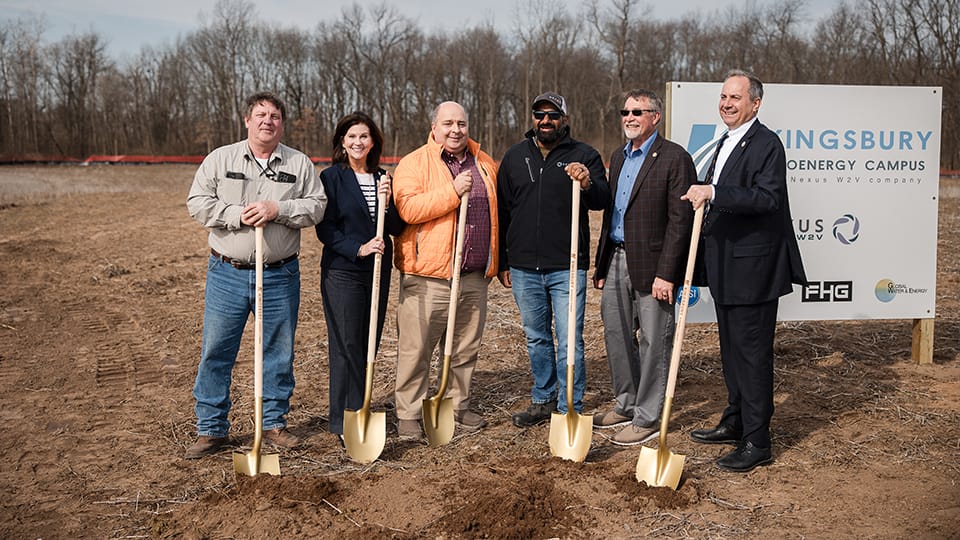
South Carolina-based Nexus W2V has broken ground on its $140 million Kingsbury Bioenergy Complex in La Porte.
The facility, when complete, will have the capacity to process and convert 200 tons of organic waste—such as food scraps and processing byproducts—into renewable natural gas, the company said Thursday.
Nexus said the project will generate up to 60 jobs during peak construction, followed by about 35 long-term jobs once operations begin at the facility, which will be located at the Kingsbury Industrial Park.
Co-founder and CEO Roshan Vani told Inside INdiana Business that the site in La Porte was ideal for this type of project.
“I think a facility like ours fits perfectly into that vision of the industrial complex,” Vani said. “It has a major rail line coming in; it’s nearing completion. We hope to be able to utilize that. It’s sited away from any major metropolitan area. But we also have great road infrastructure, power, water, everything is there. It just makes a lot of sense at a local level.”
The facility will use a process called anaerobic digestion, which takes organic waste and turns it into biogas that can then be processed into renewable natural gas for use by utility companies.
Vani said having a plant like this in place can not only provide a domestic source of RNG but also help alleviate divert waste from landfills.
“We’re not seeing new landfills getting permitted,” he said. “We’re seeing more and more growth in metropolitan cities, and so that’s naturally putting more pressure on on the entire waste ecosystem.”
Nexus said more than 40% of food produced in the U.S. is discarded, costing Americans an average of $1,500 per person annually to collect and landfill. About 30%-35% of waste is considered organic waste, Vani said, and Indiana is in a prime location for the company to take advantage of the available product needed for the RNG process.
“It’s truly in kind of the heartbeat of America and where our food manufacture and production comes from,” he said. “When we were doing an early analysis and siting this facility, [we found that] 14 or 15 major highways, three major rail lines all kind of intersect in in Indiana. And so when we think about where food is grown and grown and produced, where waste exists at a bulk, pre-consumer level, we’re right in the heart of it. A facility like this just makes a lot of sense.”
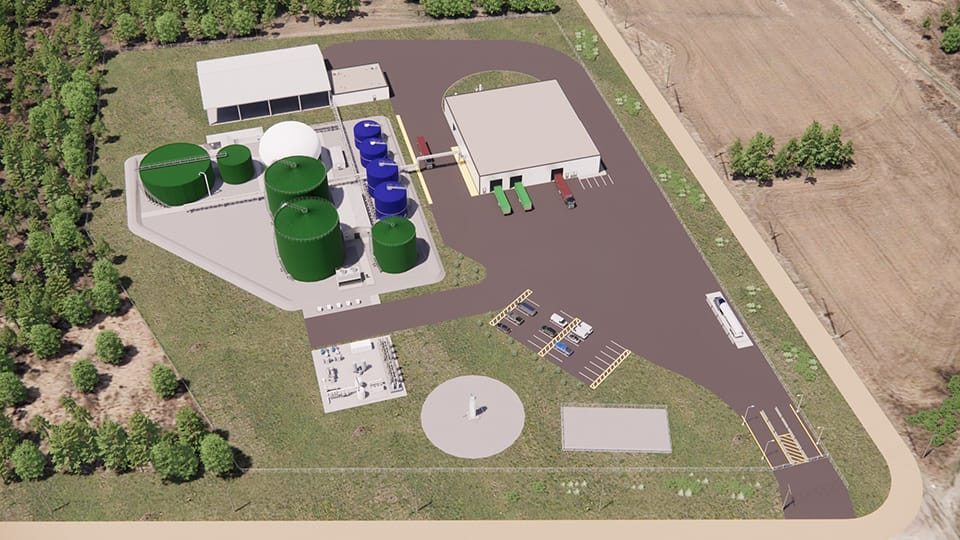
Nexus estimates that the project will help offset 4 million tons of carbon over 20 years, and the RNG produced by the facility would be enough to power nearly 46,000 homes.
The project is being privately funded by Nexus, which said in December that it had secured funding, including a $75 million funding commitment from Orion Infrastructure Capital in New York, with additional investment from parent Nexus Holdings and Khasma Capital, as well as debt financing from Ameris Bank.
“Indiana continues to lead the nation in attracting forward-thinking investments in energy and waste management solutions,” State Rep. Jim Pressel, R-Rolling Prairie, said in written remarks. “With our strong infrastructure, skilled workforce, and commitment to business-friendly policies, we are the perfect location for projects like the Kingsbury Bioenergy Complex. As a bonus, Indiana is setting an example for the rest of the country on how to balance economic growth with efficiency.”
Construction on the facility is slated for completion in late 2026.
Vani added that there is potential for additional facilities in Indiana and elsewhere in North America that could not only convert organic waste into RNG, but also convert post-consumer waste and so-called “green waste”—such as waste wood, trimmings, and tree waste—into alternative agricultural products.
“We can only make so many compost facilities to be able to take that,” he said. “There’s really great solutions out in the market for being able to use that woody biomass for alternative products that can go back into the soils.”