
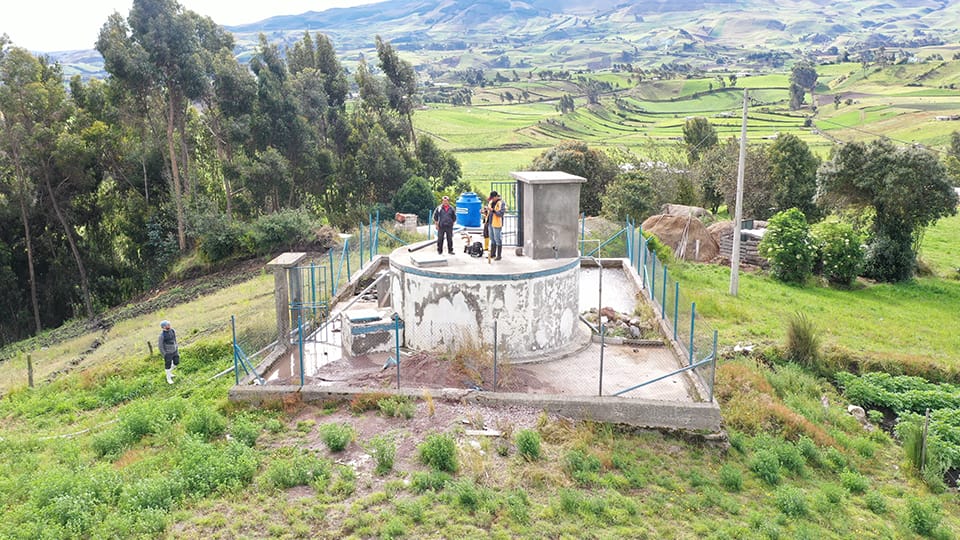
Students from Trine University’s chapter of Engineers Without Borders will head to South America this summer in an effort to improve the water supply system in a small, rural community in Ecuador.
A group of students, led by Tim Tyler, a professor of civil engineering at Trine, will begin the multiyear project by assessing the current situation in Tuntatacto, Ecuador and developing solutions to make water access more feasible.
The community of about 1,200 people in the Andes highlands currently relies on water from a spring on the slopes of the mountain that flows into storage tanks before being distributed to residents.
Tyler told Inside INdiana Business that the system, however, is not without its flaws.
“The current problem is that they keep running out of water during the dry season, and so we’re looking at some ways to improve that for them,” he said. “That’s what we’re going to address here starting this summer.”
Tyler explains the community’s existing water supply system.
Trine says the community, located about 130 miles south of the country’s capital of Quito, relies heavily on agriculture and livestock. In addition to a lack of water during the dry season, the community’s current system also has sediment and clogging issues that have caused concerns over water quality.
When the team arrives at Tuntatacto, the students will split into two groups. The first will focus on surveying members of the community to understand the impact of the system.
“We’ll be meeting with them with some specific questions on their water needs,” Tyler said. “When do they run out of water? How much water are they currently getting? In other words, we’re trying to get a feel for the needs of the community.”
Tyler discusses what the students will be doing when they arrive in Ecuador.
The other group will conduct measurements of the existing water system, including dimensions of the structures, water flow rates, and water quality testing.
All of that work will go toward studying the feasibility of developing a sustainable new water source, the university said. Once those plans are finalized, the team will return to the community to begin construction.
The project is similar to a 2022 effort in a nearby community in Ecuador, where 15 Trine students were able to create a dependable water system that resolved that community’s water challenges.
Tyler said the big takeaway for students involved in these types of projects is using their engineering skills to help people.
“The methods that we typically employ in a developing country are are not the same standards that we would use in the U.S.,” he said. “So from a technical standpoint, they learned a few basic things. But I think the biggest takeaway is their career paths are going to be working to improve people’s lives. They’re in this particular situation; a basic need of life is to have clean, safe water.”
Tyler said he has more students wanting to participate in the Engineers Without Borders project than he has spots for, which is an encouraging sign. And alumni who participated in previous projects continue to show their support through monetary donations to the Trine EWB chapter.
The Ecuador project, Tyler noted, will continue after construction is complete as the team will return to evaluate the new system and make sure it’s working properly. Once that is complete, the university will start a new project.
“I think we will continue to do projects like this for the foreseeable future,” Tyler said.